BEN&
JERRYS
OR
BAD&
JOKES
SUBVERTISING MANIFESTO
Ben & Jerry’s was born as a brand with purpose — conscious, activist, and socially driven.
Today, under Unilever’s ownership, that essence has faded, and the authentic voice that once challenged the system has become part of it.
This manifesto was developed to expose that shift, highlighting the brand’s less ethical choices and questioning how far it has drifted from its original mission.
Analyzing a brand like Ben & Jerry’s and then turning to a multinational like Unilever — widely known for upholding values that often clash directly with the core principles and pillars of Ben & Jerry’s — raises an unavoidable question:
How does a massive food corporation like Unilever manage to maintain the fundamental values of a brand like Ben & Jerry’s, when the two seem to follow almost opposing ethical codes?
As with most large conglomerates, Unilever has mastered the art of coating inconvenient truths with a glossy finish. Every year, the company quietly tucks away the less palatable realities behind its production, all in the name of preserving its spotless global image.
But in the end, one can’t help wondering: is there any flavour more irresistible than the one born from a good scandal? Perhaps that’s the secret ingredient that keeps the brand so… memorable.
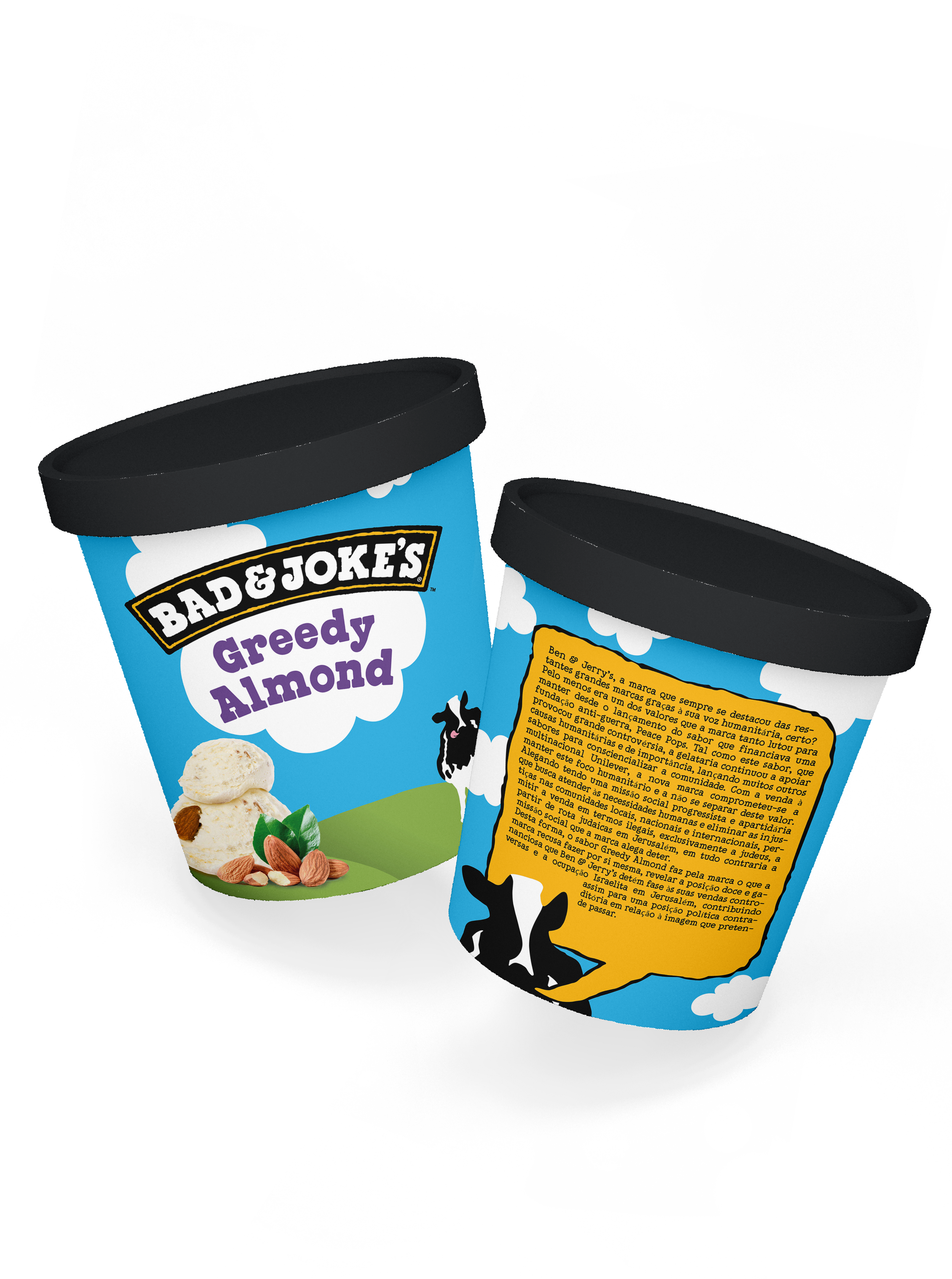
Building on this extensive research into the brand — and the secrets it works hard to keep under wraps — it was developed an awareness campaign titled Bad&Jokes. The concept revolves around ice-cream packages and posters placed throughout the market, revealing the brand’s new true flavours.
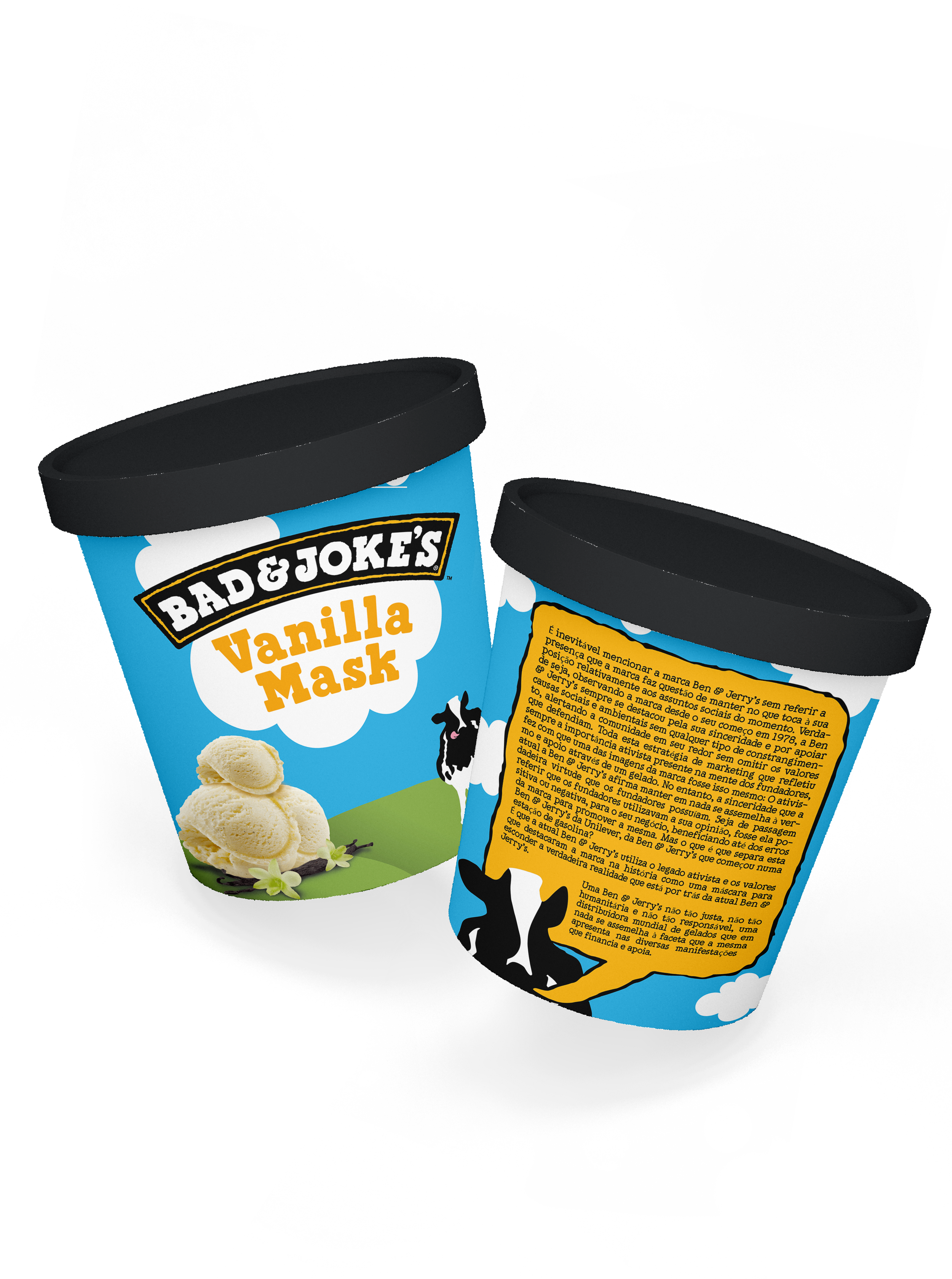
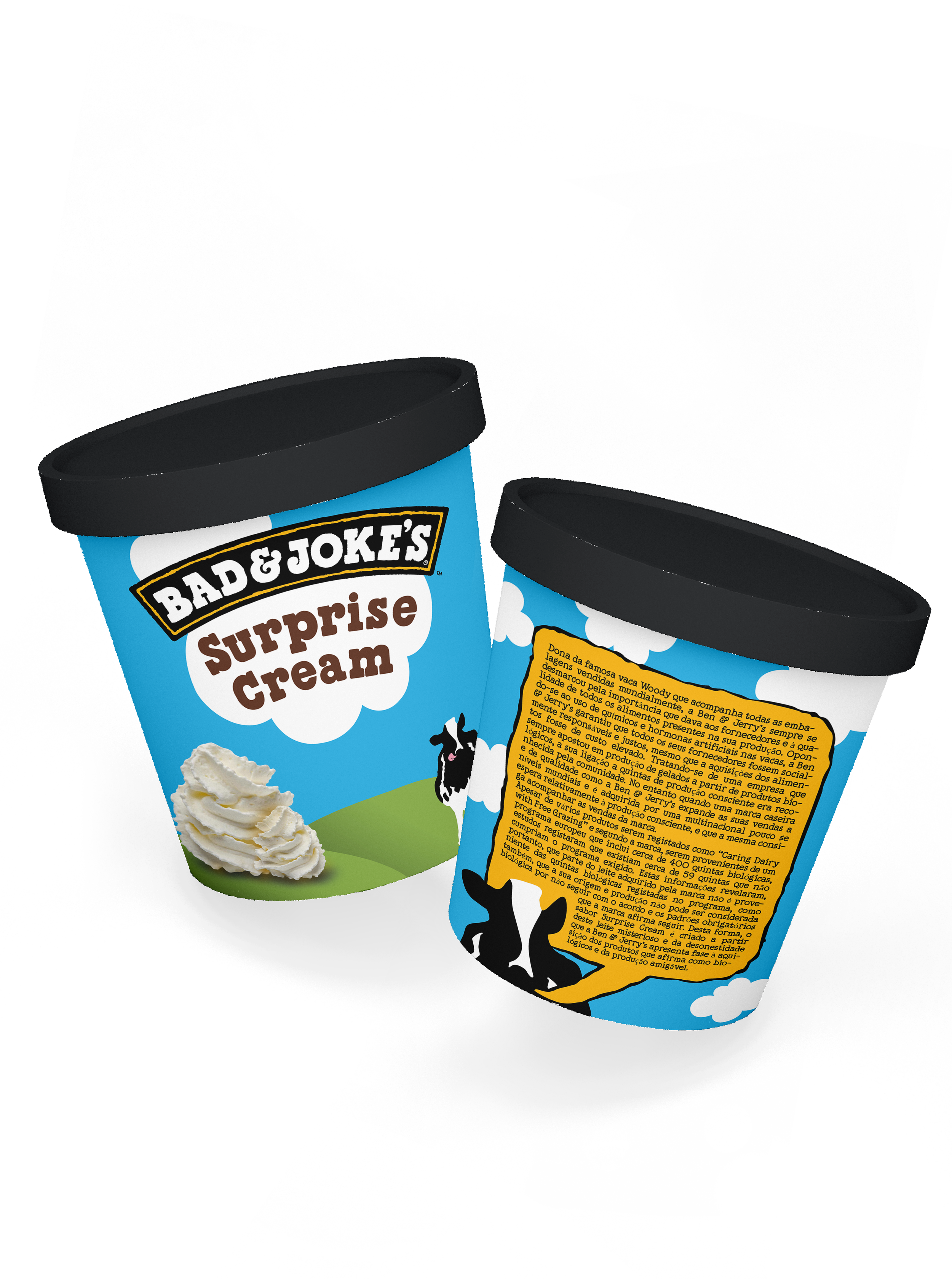
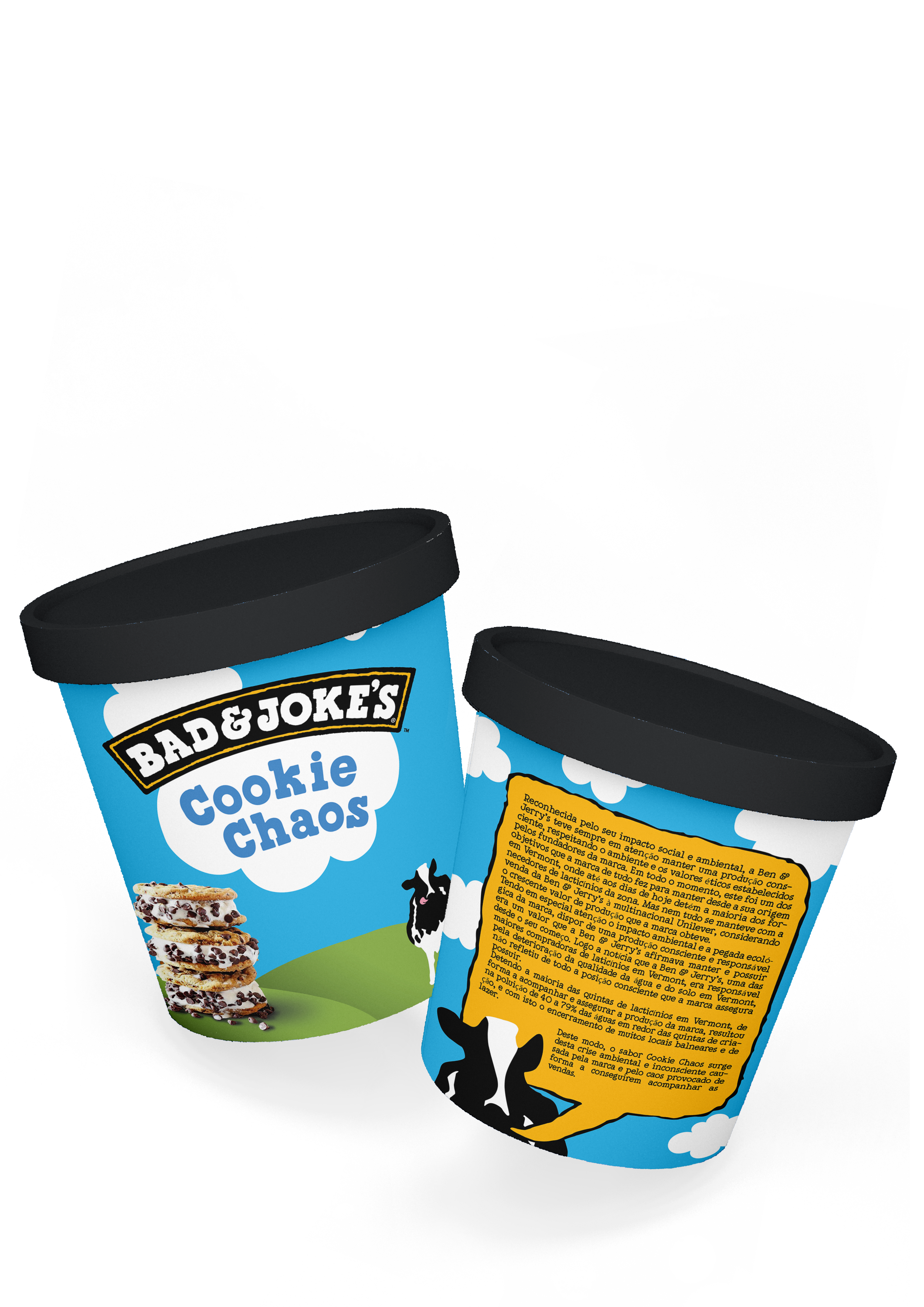
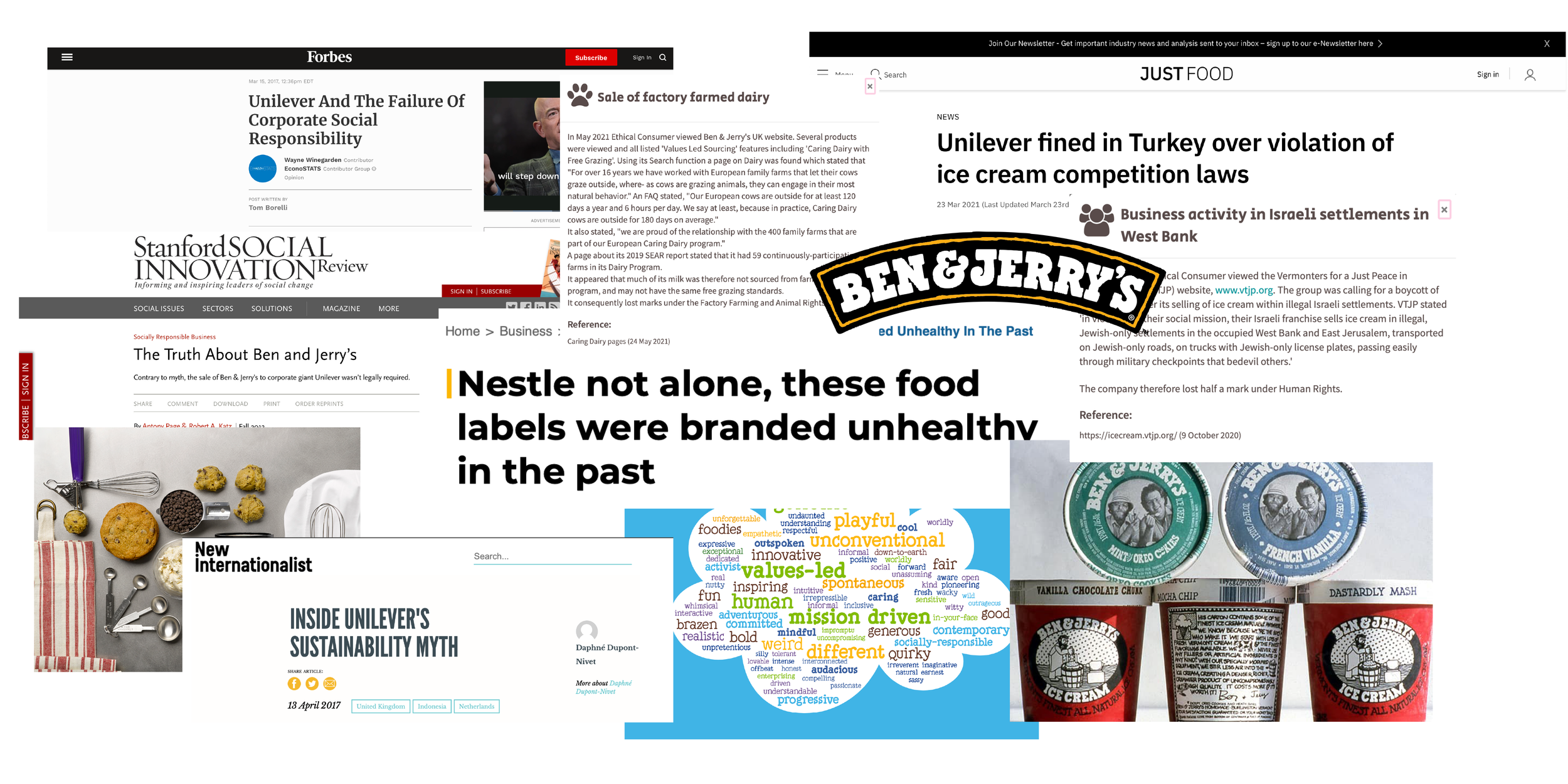
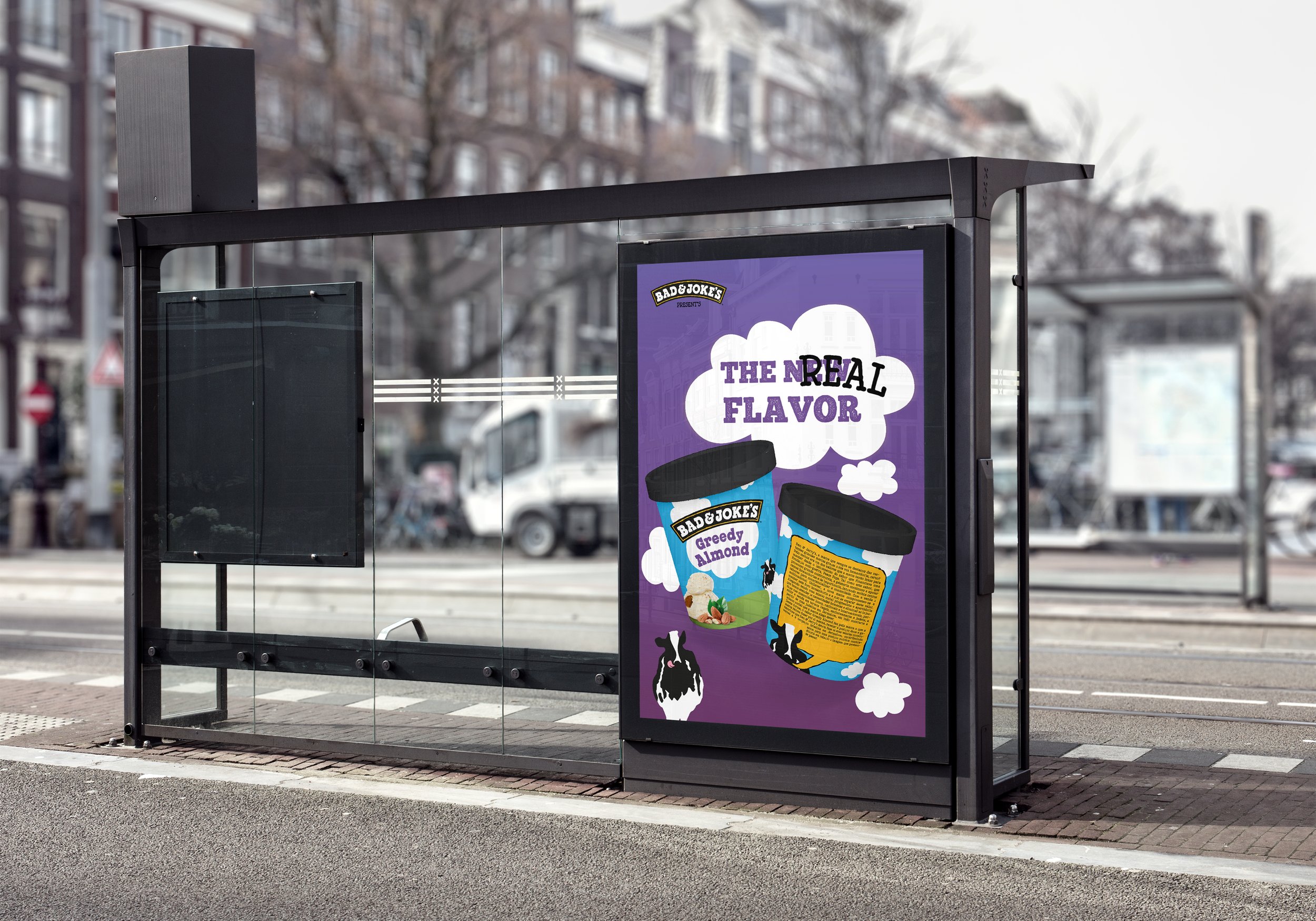
This project is rooted in rigorous research and a sharp critical eye — not only examining products or logos, but also the narratives, promises and corporate silences behind them. From an in-depth study of Ben & Jerry’s and its absorption into Unilever, I developed Bad&Jokes as a creative response that merges research, design and activism. More than an ironic commentary, it is a communication strategy built to provoke, reveal and reclaim public debate around brand accountability.
The campaign intervenes directly at the most sensitive point of contact: the product itself. By reimagining packaging and creating flavours such as Greedy Almond, Vanilla Mask, Cookie Chaos and Surprise Cream, each paired with satirical texts instead of ingredient lists, every tub becomes a piece of critique — design that informs, provokes, and questions. The coordinated use of posters, billboards and point-of-sale activations, reinforced by a consistent narrative on social media, ensures the message stays present in the consumer’s everyday experience, prompting smart, unavoidable encounters with the realities the brand attempts to soften.
Strategically and creatively, this work showcases my ability to deconstruct brands, map ethical contradictions, translate research into visual proposals and deploy guerrilla-style branding tactics that spark conversation. From documentary research to visual conceptualisation — typography, verbal language, packaging and touchpoints — I ensured coherent aesthetic and conceptual direction. The project demonstrates not only that I can build a brand, but also that I can open new avenues for intervention that impact visual culture and the public sphere.
Ultimately, Bad&Jokes is not about tearing a brand down — it is about demanding responsibility. It transforms the familiarity surrounding a logo into an active question: what level of accountability do we expect from the companies behind the products we consume? This campaign is design with ethics, imagination and critical depth — a piece of visual culture that invites consumers, journalists and decision-makers to look closer, question more, and demand transparency. If the purpose of design is to shift behaviours and narratives, then this project fulfils that purpose: it creates productive discomfort and opens space for real, necessary conversations.
academic project
2022